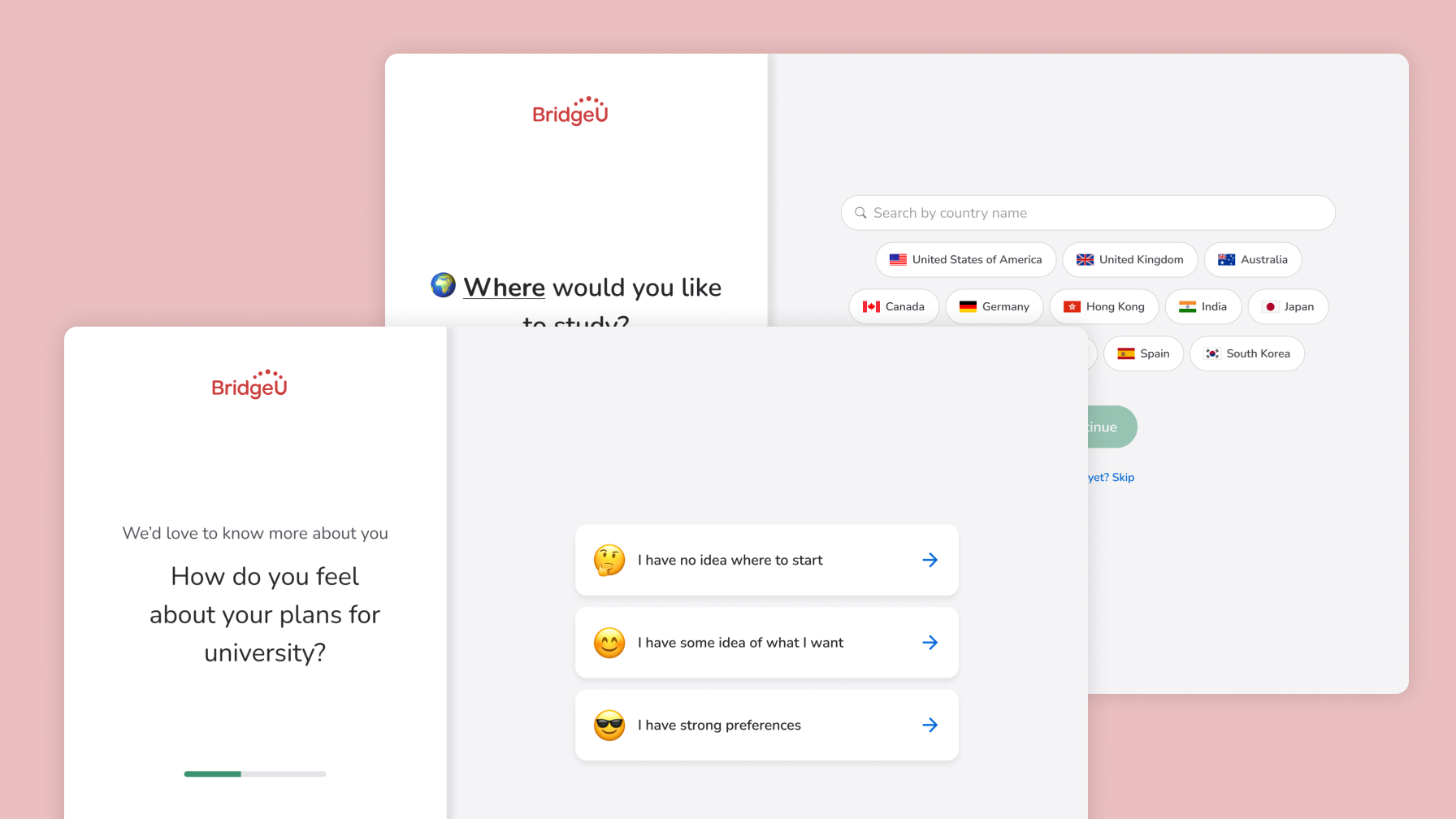
Overview
BridgeU is an ed‑tech platform that helps high‑school students explore, research, and apply to best‑fit universities. By 2023, new students were signing up but not coming back — they didn’t complete basic preference setup and failed to return after their first session. Student engagement was the company’s top priority, and my squad focused on the very top of the funnel: onboarding.
I led the redesign end‑to‑end — research, journey mapping, prototyping, testing, and final design — in a lean team (1 PM, 3 engineers). Activation rose from 48% to 74%, and time to enter preferences dropped from 41 minutes to 12.
My role: Senior Product Designer — research, journey mapping, ideation, testing, and design execution.
The Problem
When I audited the existing onboarding flow, one thing stood out immediately:
There was effectively no onboarding.
Students set a password and landed directly on a dense homepage, with no guidance, framing, or sense of progress.
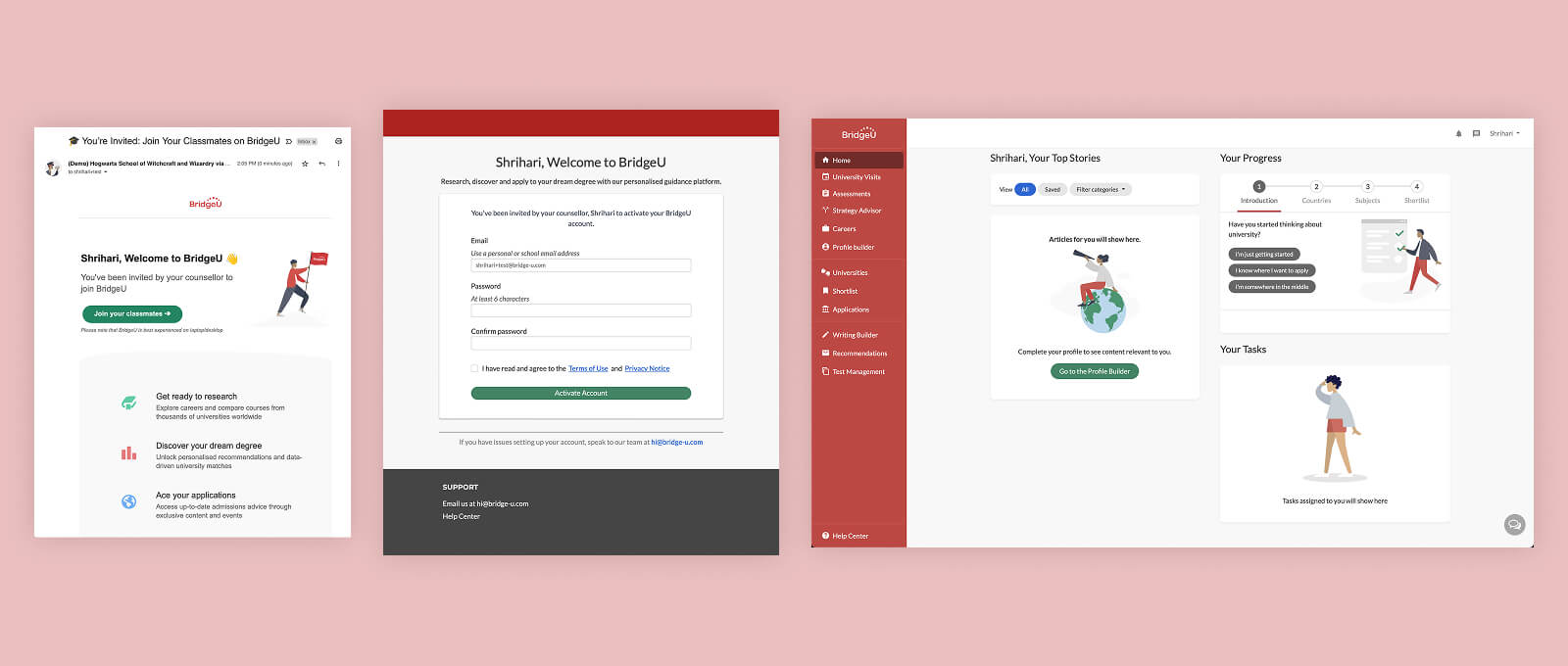
This created three core problems:
- Students didn’t know where to start
- BridgeU felt overwhelming and irrelevant to their immediate needs
- The product asked for commitment before delivering value
Defining the Onboarding Goal
From historical data and prior research, we knew:
- Students who entered country or subject preferences were far more likely to return
- Early clarity led to more shortlists and deeper engagement later
So I reframed onboarding around a simple objective:
Help students articulate what they already know — and use that to personalise everything that follows.
This shifted onboarding from a setup task into a confidence‑building exercise.
My Approach
Rather than jumping straight into screens, I focused on structure and sequencing.
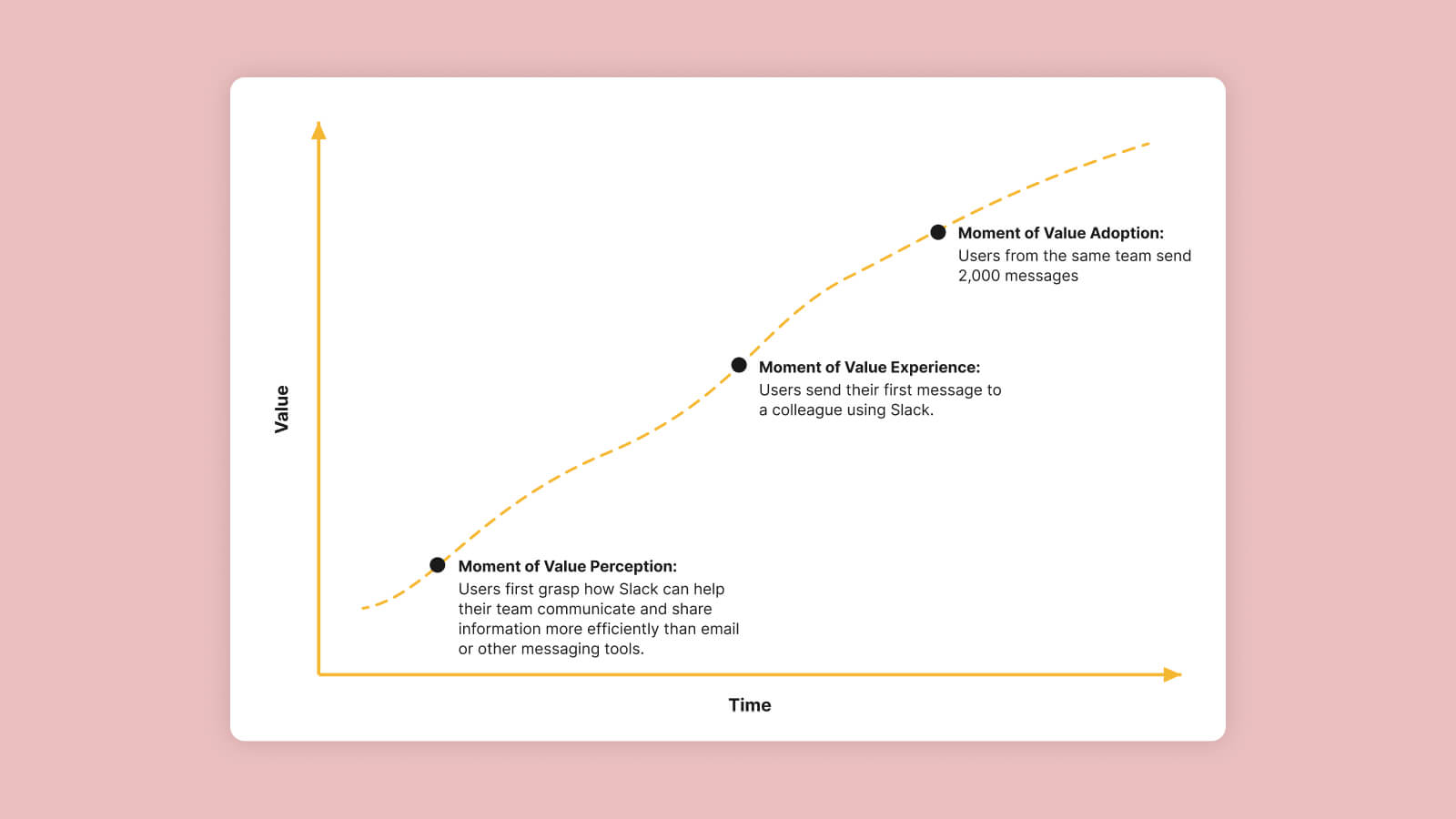
1. Designing for “Aha” Moments
I ran a cross‑functional workshop with Product, Design, and stakeholders to identify what meaningful progress looked like for different types of students.
We mapped onboarding around three “aha” moments:
- Value Perception – “BridgeU understands where I’m starting from”
- Value Experience – “I’m seeing useful recommendations already”
- Value Adoption – “This can guide my decisions over time”
2. Mapping the Student Journey
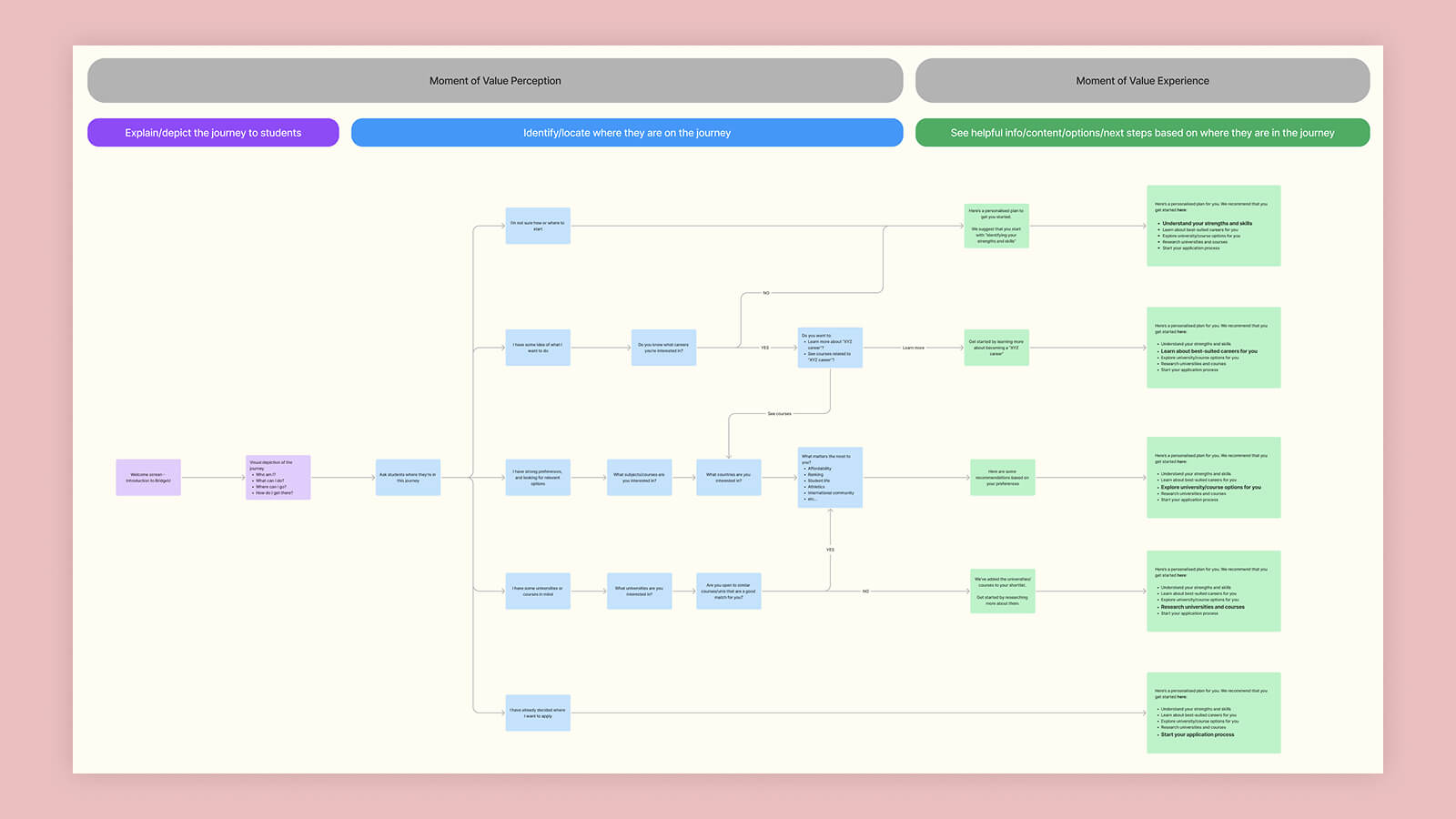
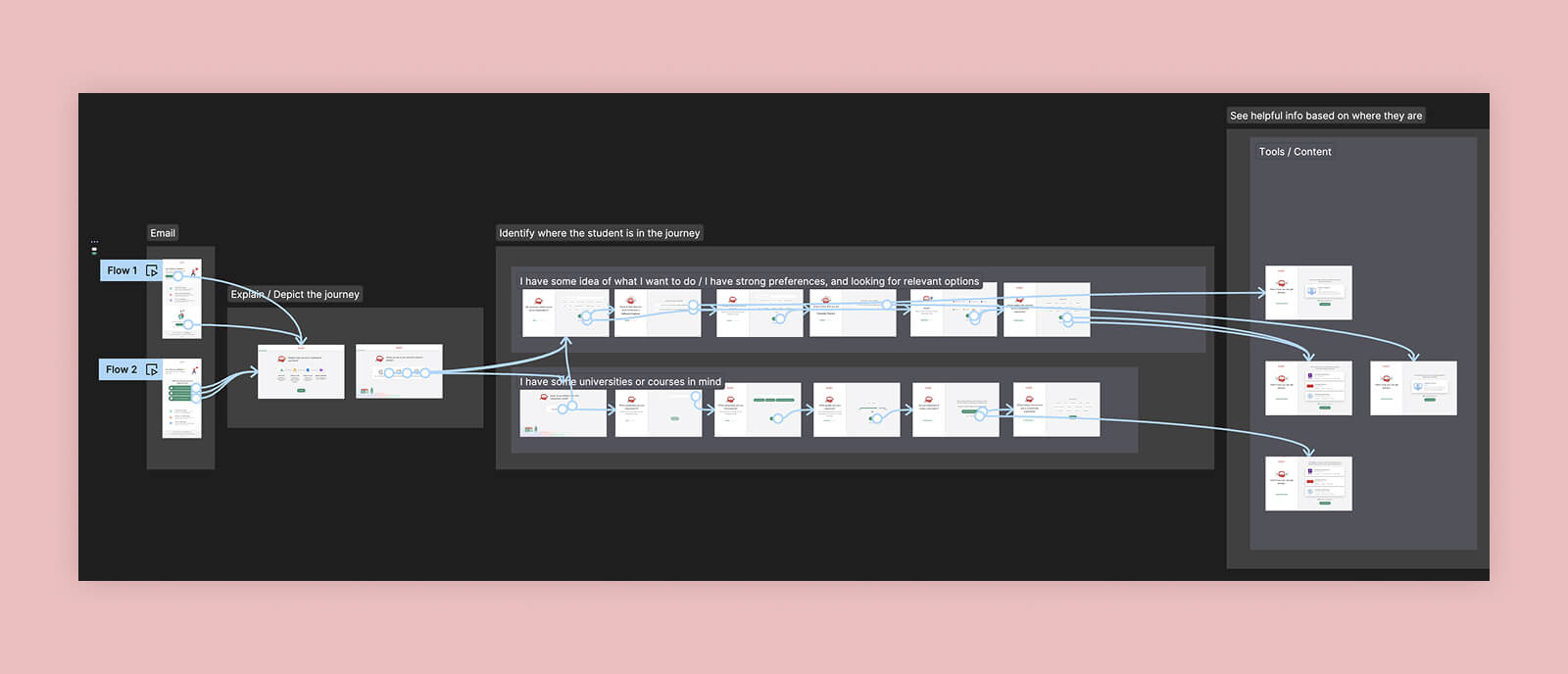
Students weren’t a single persona. Through workshops and prior research, I saw students fall on a spectrum:
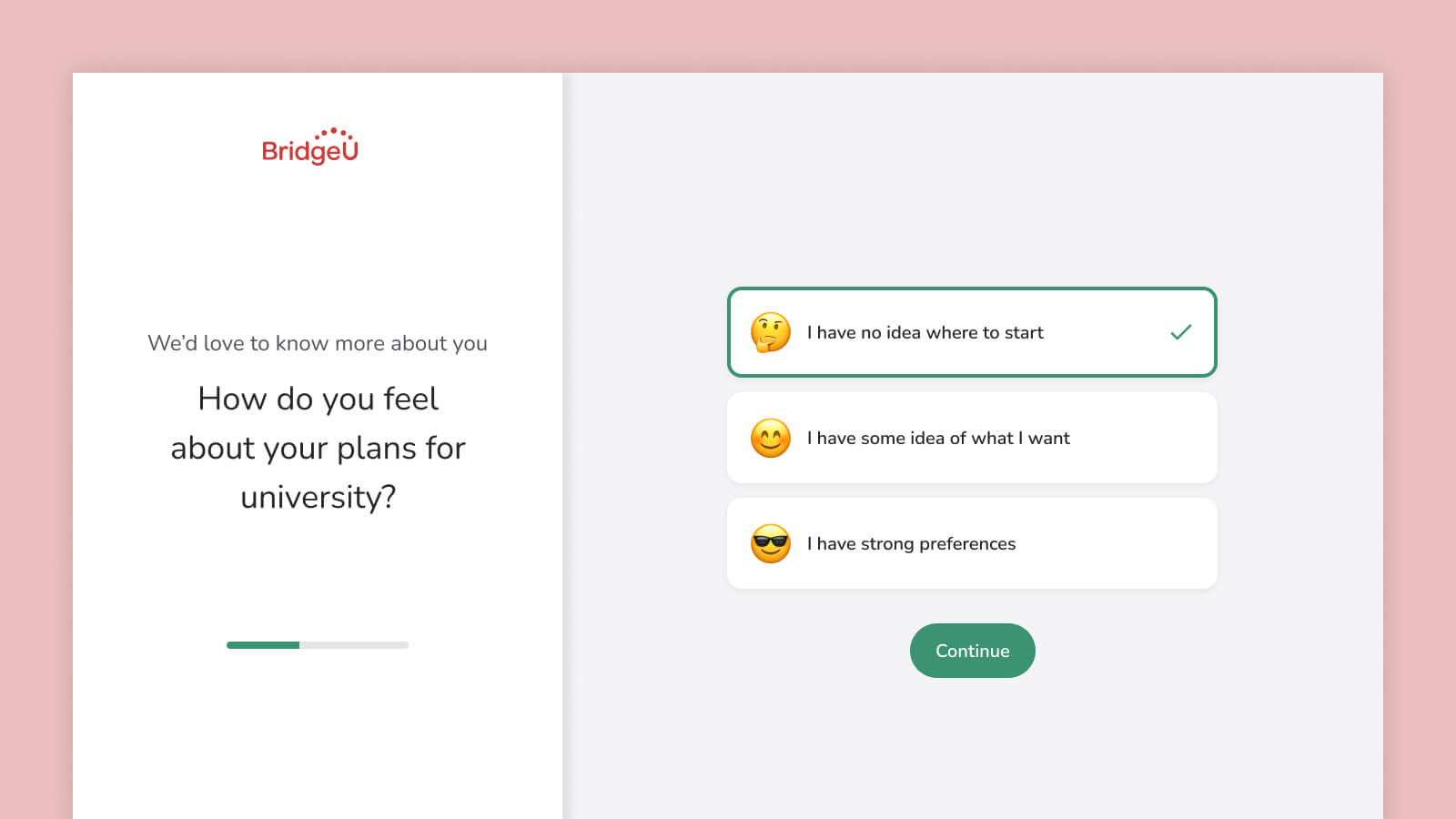
- No idea where to start
- Some ideas, but uncertain
- Strong preferences already formed
I created high‑level journey maps and flows in FigJam to ensure onboarding could adapt to where students were mentally — without overwhelming them.
Ideation & Early Concepts
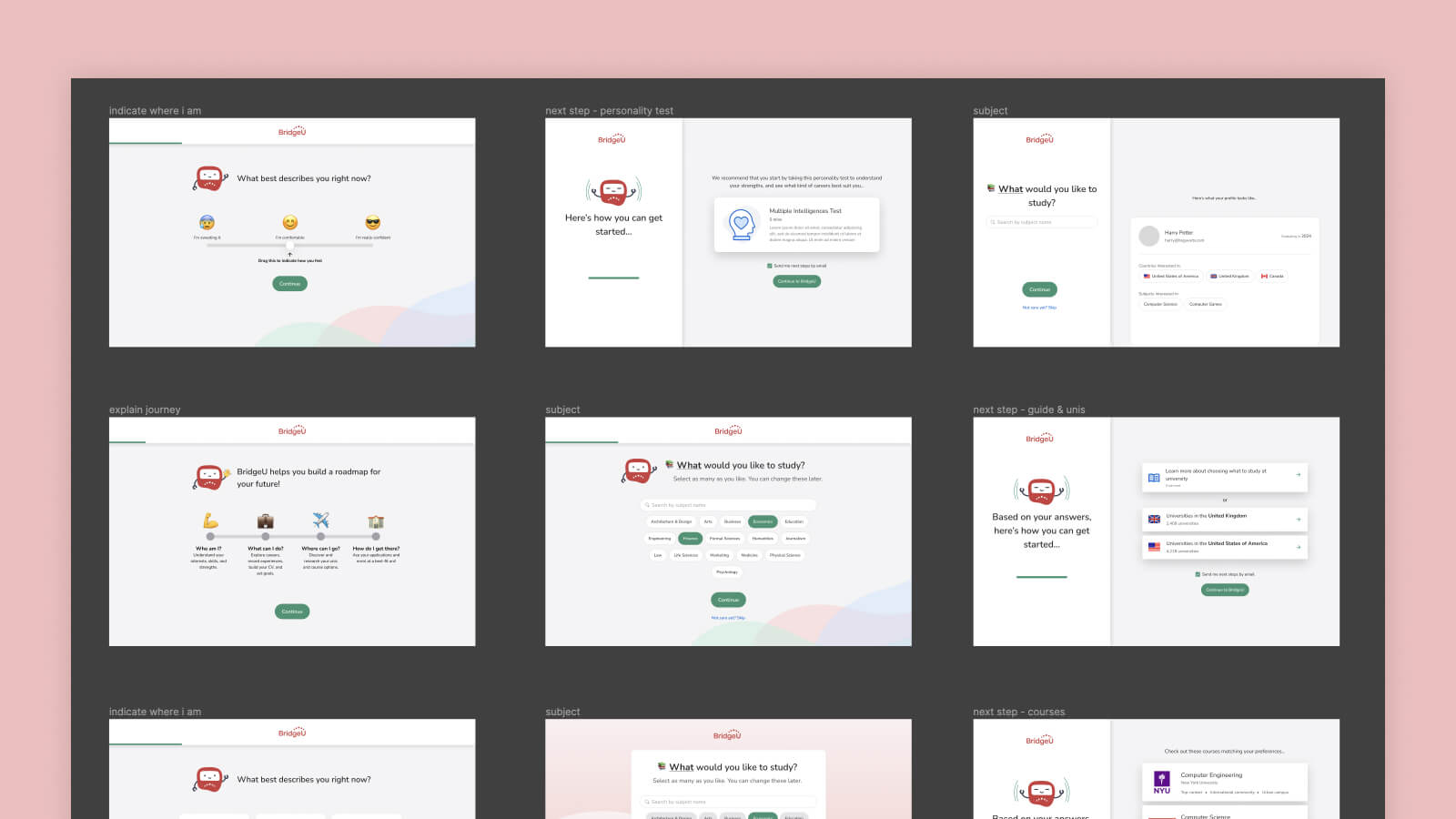
Using the flows as a guide, I explored multiple onboarding concepts through sketches and low‑fidelity wireframes.
Key ideas I tested:
- Asking students how confident they felt about their plans
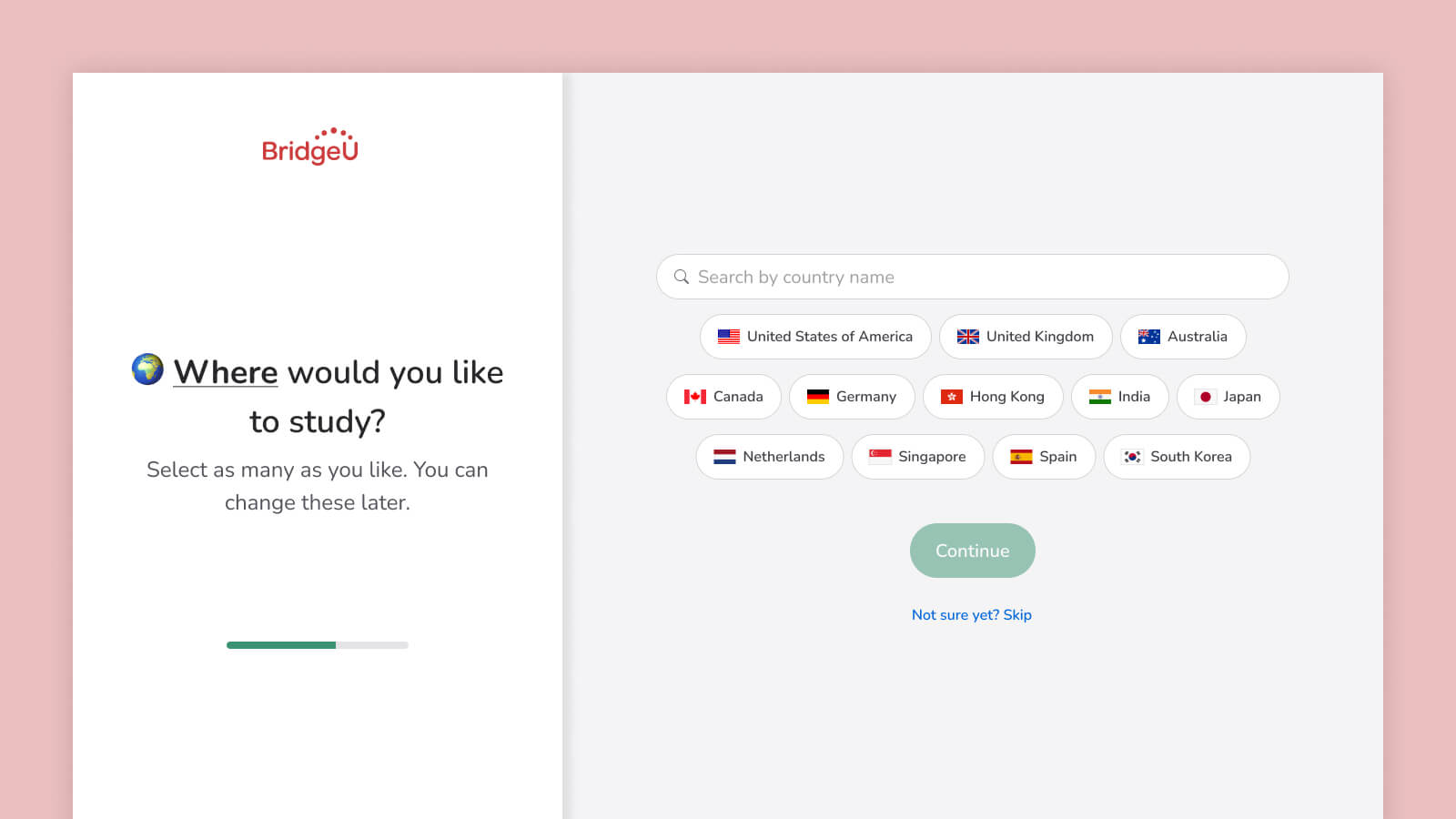
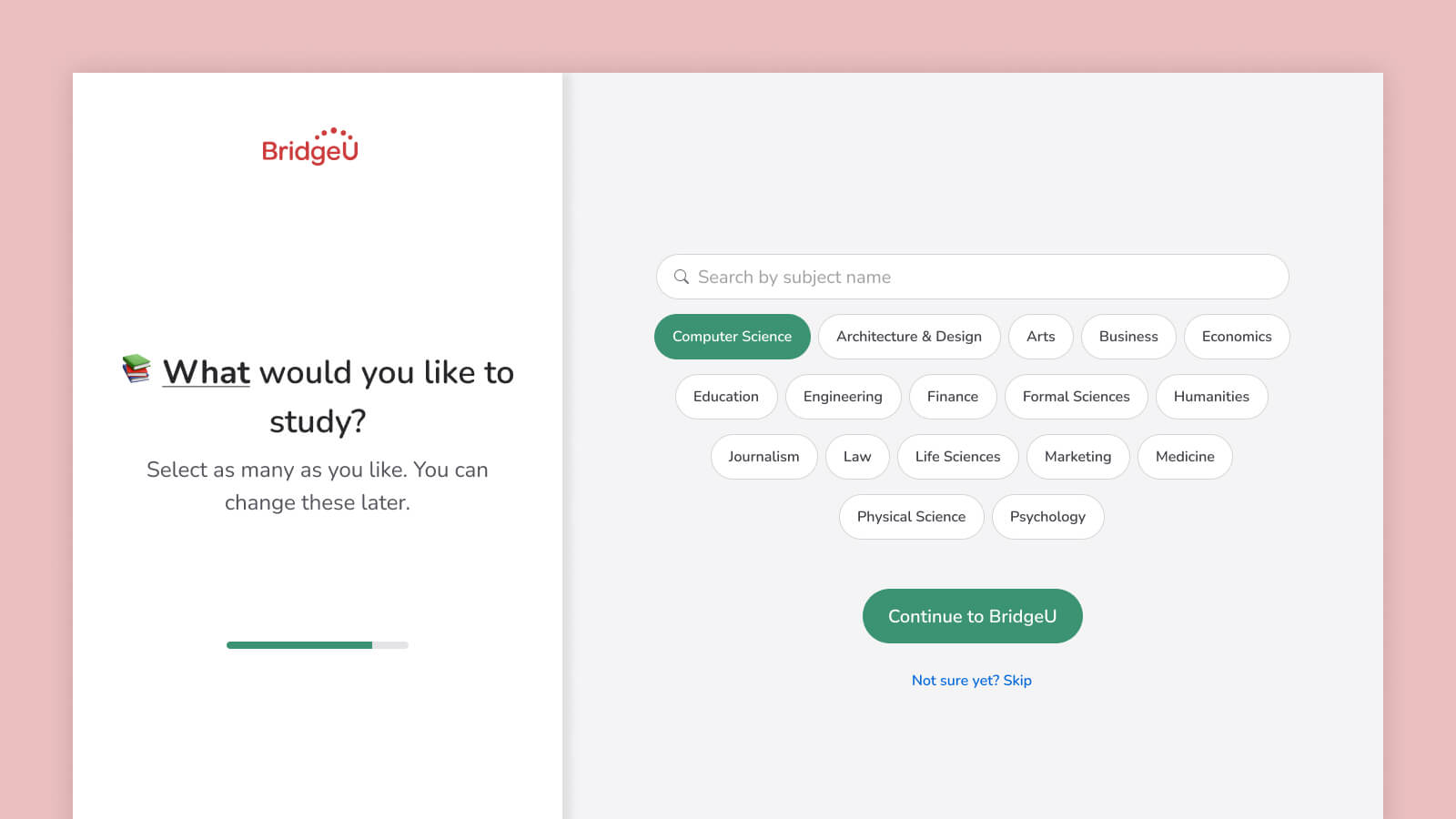
- Letting students skip or defer questions
- Framing questions as progress, not data collection
I iterated quickly with internal feedback before moving into prototyping.
Prototyping & Testing
I stitched together a prototype covering the core onboarding journey and tested it with 6 students graduating in 2024. Rather than testing polish, my learning goals were:
- Do students recognise themselves in the journey?
- Does the framing feel supportive or evaluative?
- Do the questions feel relevant and worth answering?
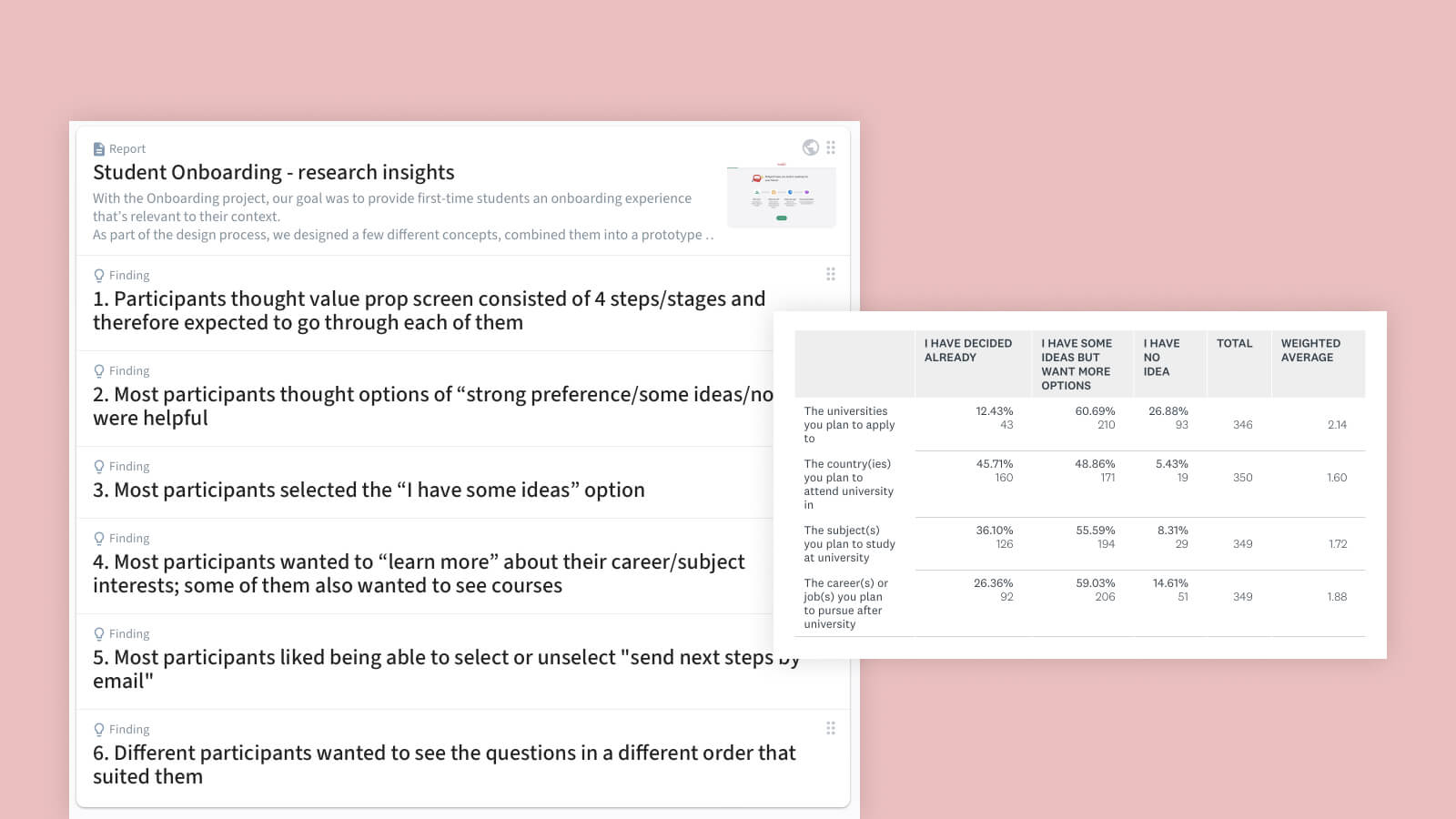
Synthesising interviews and tagging sessions in Condens surfaced a few key insights: students expected onboarding to feel guided, not exhaustive. Most preferred starting with broad signals (country / subject). And control mattered — students wanted to skip, reorder, or defer. These insights directly shaped what we shipped.
Final Design
The final onboarding experience:
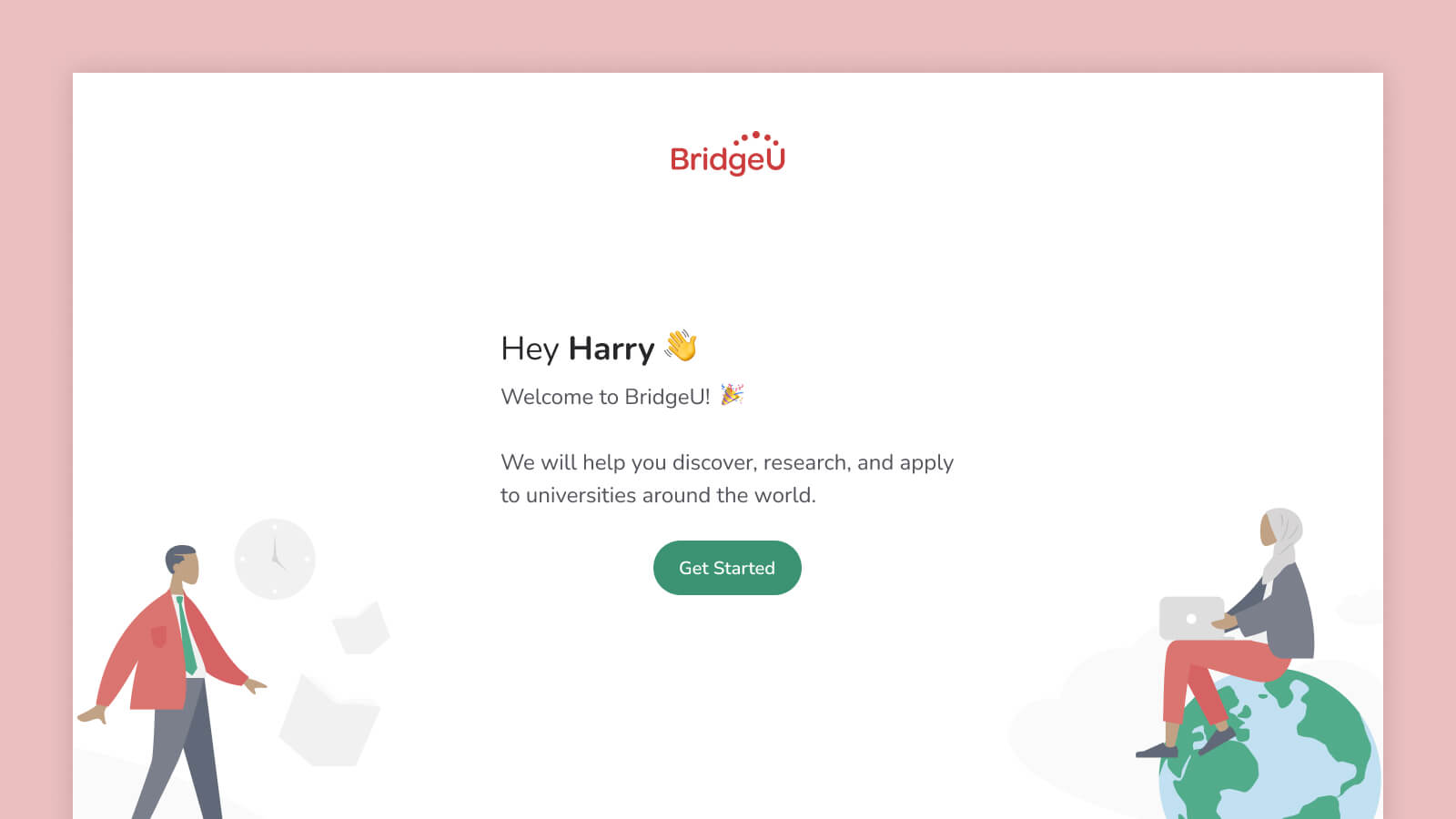
- Welcomed students with clear framing
- Asked how they felt about their plans
- Collected country and subject preferences progressively
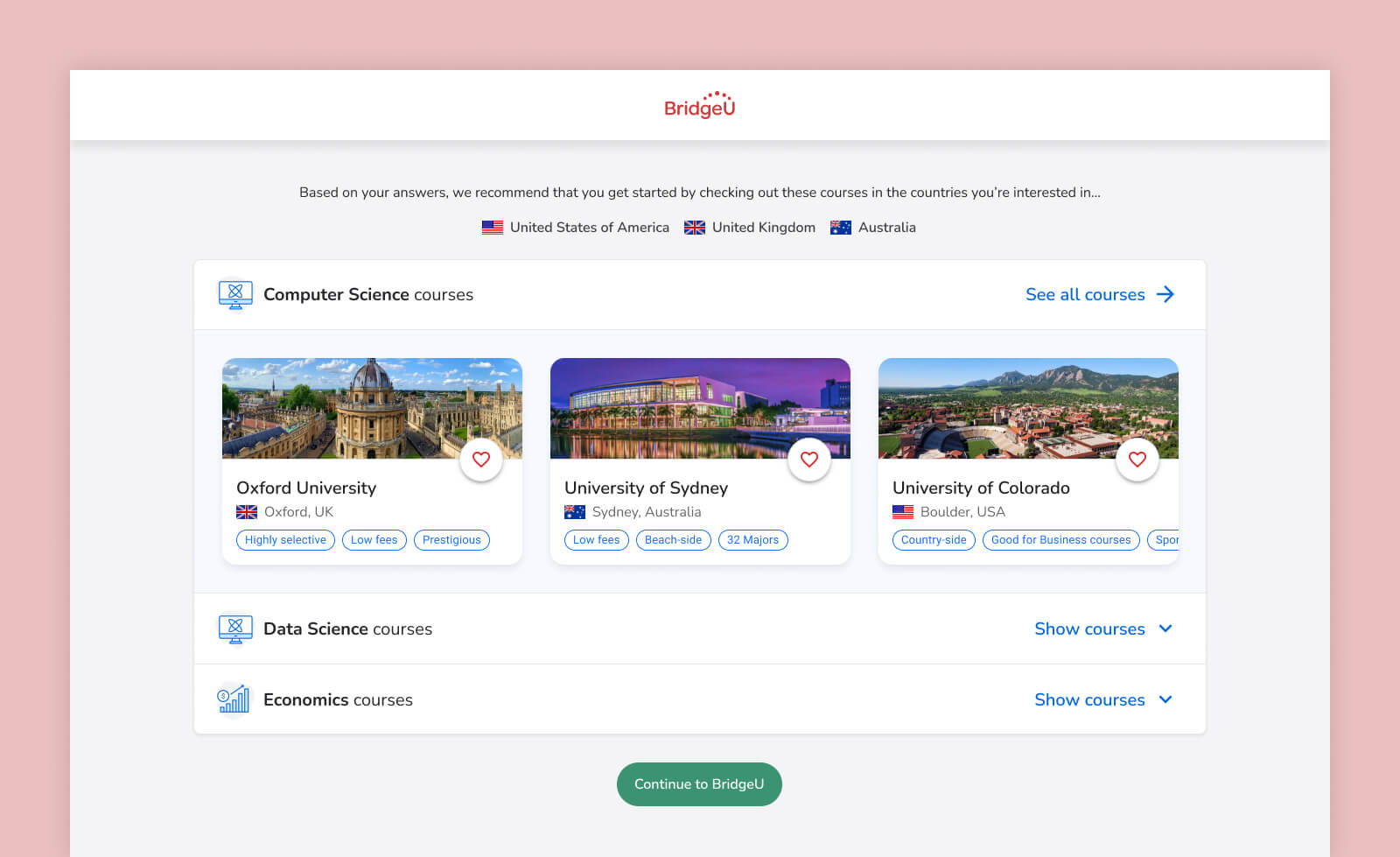
- Transitioned seamlessly into personalised discovery
Impact
Within weeks of shipping:
- Activation rose from 48% to 74% — a +26 percentage point increase, meaning significantly more students were set up for personalised recommendations from their first session
- Time to enter preferences dropped from 41 minutes to 12 minutes — students were moving through onboarding faster because the flow matched how they actually think about their plans
These gains translated directly into stronger downstream engagement: more shortlists, more exploration, and higher return rates. Onboarding became one of the highest-leverage surfaces in the product.