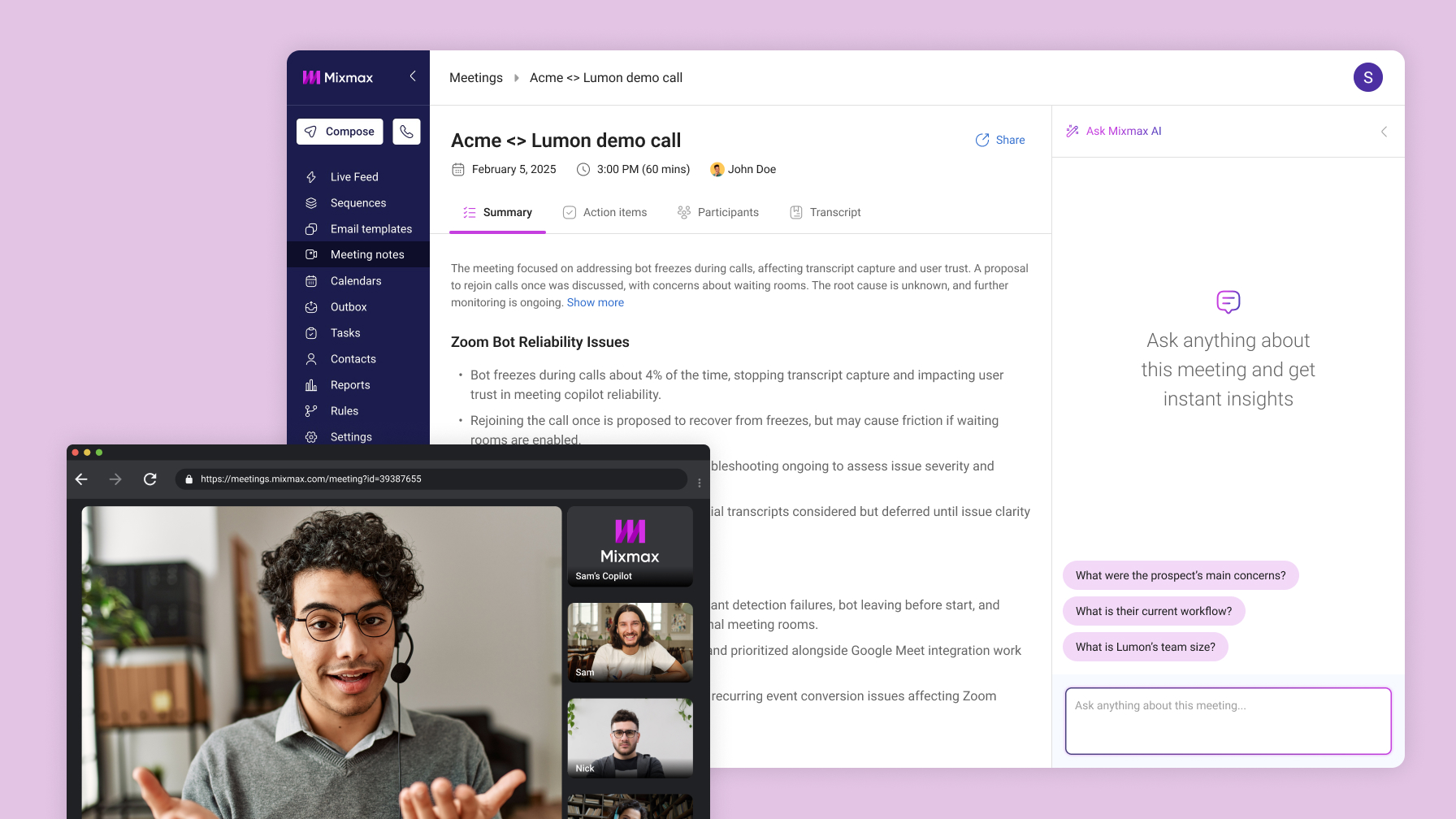
Overview
Mixmax was an email-only sales engagement platform. Sales teams were asking for help beyond outreach — they needed support across the entire meeting lifecycle. A company OKR targeted increasing meetings booked, and AI capabilities were becoming production-ready.
I led the design of Meeting Copilot: an AI-powered tool that supports sales reps before, during, and after meetings. It became Mixmax’s highest-converting feature — ~30% of paid conversions within six months of launch — and repositioned the company as an AI-first sales platform.
My role: Discovery, UX strategy, prototyping, and AI prompt design. I worked in a lean team (1 PM, 4 engineers) and partnered closely with Sales throughout.
The Problem
The conversational intelligence space was already crowded, but most tools focused on post-call transcripts and manager dashboards — standalone products disconnected from daily sales workflows. From competitive analysis and customer conversations, I identified a clear gap:
Most tools helped managers analyse meetings after the fact, but did little to help reps perform better in the moment.
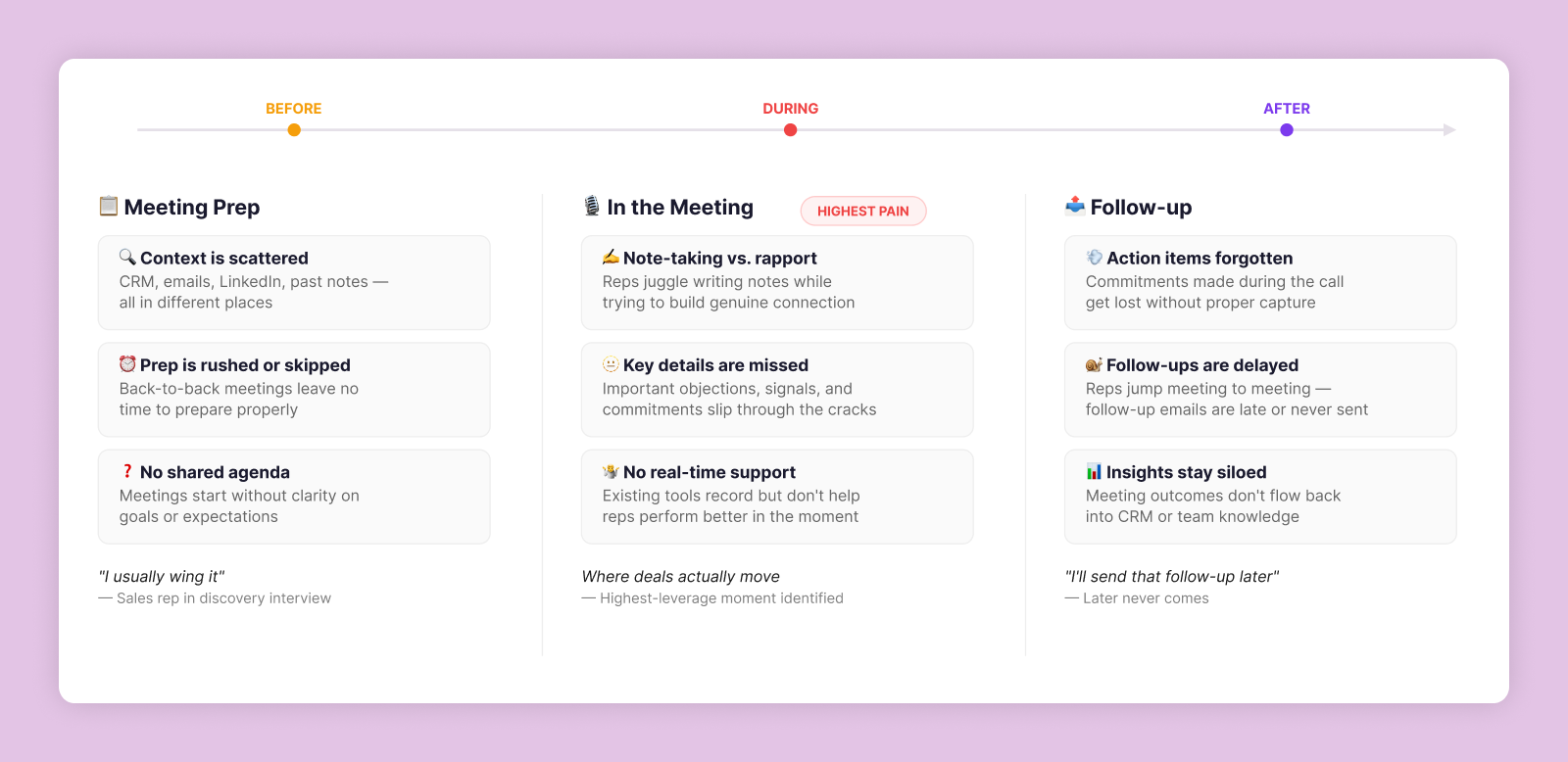
From research and workflow mapping with sales reps, three pain points kept surfacing: before meetings, context lived across emails, CRM notes, and memory — prep was rushed or skipped. During meetings, reps took notes while trying to build rapport, missing important details. After meetings, action items were forgotten and follow-ups were delayed or never sent.
Rather than treating these as separate features, I framed them as a single lifecycle. One early insight shaped the whole project: reps don’t think in tools — they think in workflows. Email, meetings, notes, and follow-ups all blur into one mental model. Mixmax’s opportunity was to embed meeting intelligence directly into that flow.
I pushed to start with in-meeting capture because it created a data foundation — capturing what was said unlocked better summaries, follow-ups, and prep later — and it was the highest-leverage moment, where deals actually move.
Phase 1: Invisible Assistant + Email Summaries
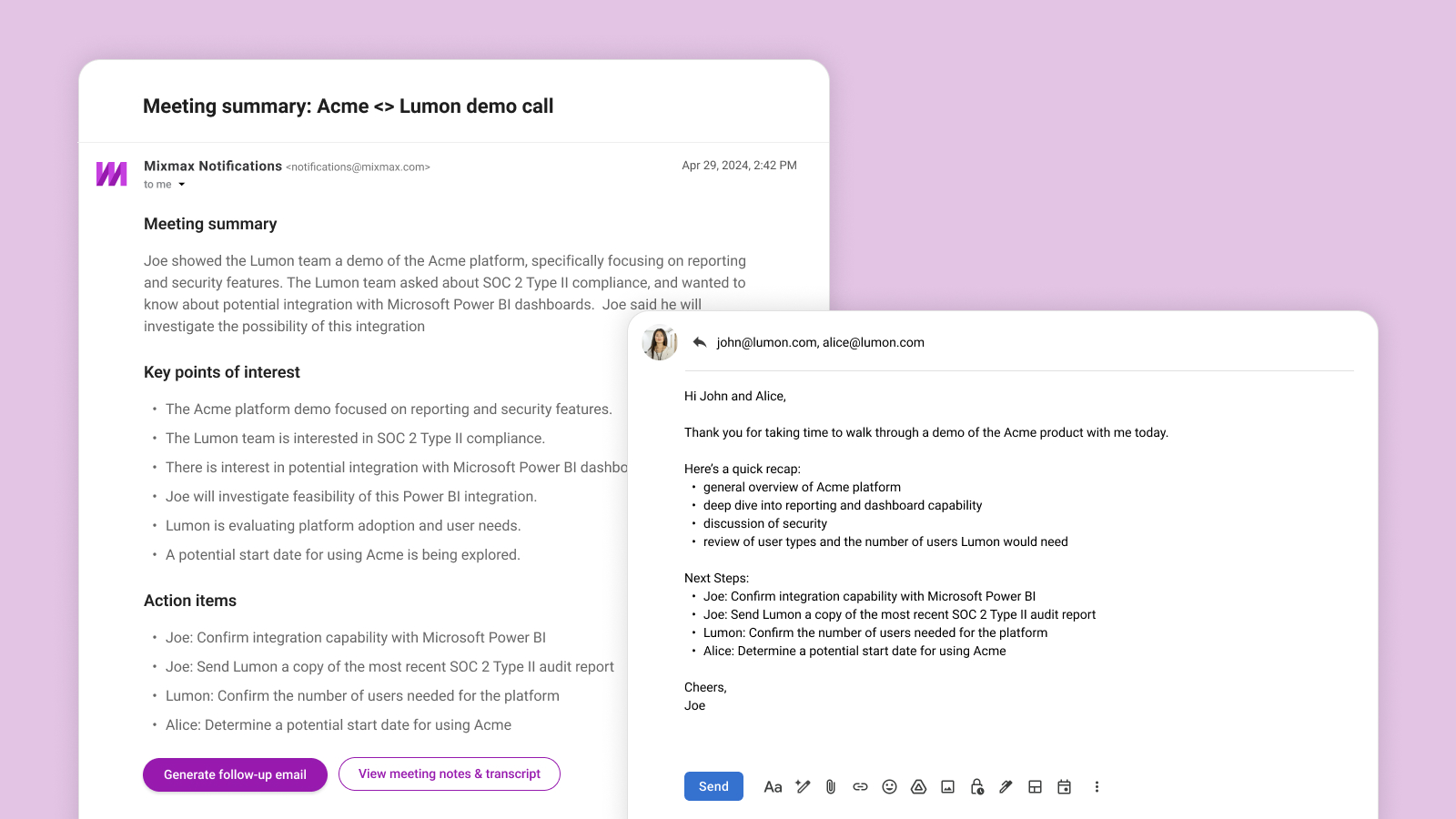
The first approach was a silent assistant built into the Mixmax browser extension — it captured meetings passively with no setup required and delivered a post-meeting summary via email.
I designed the summary around one principle: meet reps where they already are. Reps live in their inbox, so instead of building a dashboard they’d need to learn, the summary arrived as an email — zero friction, immediate value.
The feedback was split clearly:
What users didn’t like: the invisible recording. There were strong concerns about lack of transparency, ethical issues around capturing meetings without clear participant consent, and no visible Mixmax presence for prospects. Technical reliability was also an issue.
What users loved: the post-meeting summaries. Specifically:
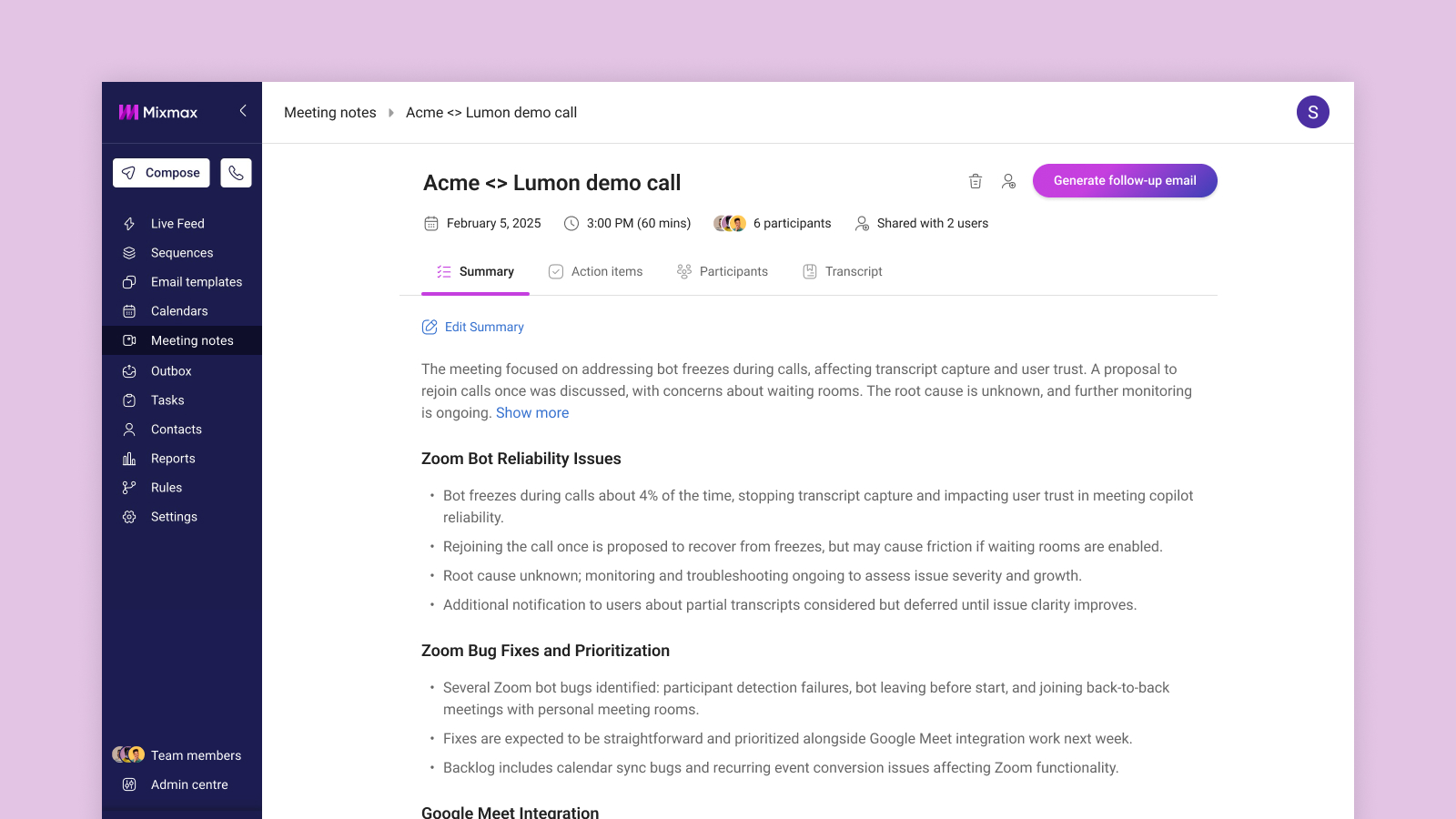
- Summaries were tailored to sales personas and use cases — not generic transcription dumps, but structured around what a sales rep actually needs to know
- Action items were clearly captured and assigned, so nothing fell through the cracks
- The follow-up email flow was a breakthrough. Sending a follow-up after a meeting is one of the most important steps in the sales process, but reps routinely miss it because they jump from meeting to meeting. Meeting Copilot drafted a follow-up in the rep’s tone, ready to review and send
Phase 1 validated demand for meeting intelligence and proved the value of email-first summaries — but the invisible capture approach had to go.
Phase 2: Iterating on the Beta
We released Phase 1 as a closed beta and kept a tight feedback loop with users. The summaries were clearly working — the problem was how we captured meetings. Based on what we heard, I led three key iterations:
Bot-based capture
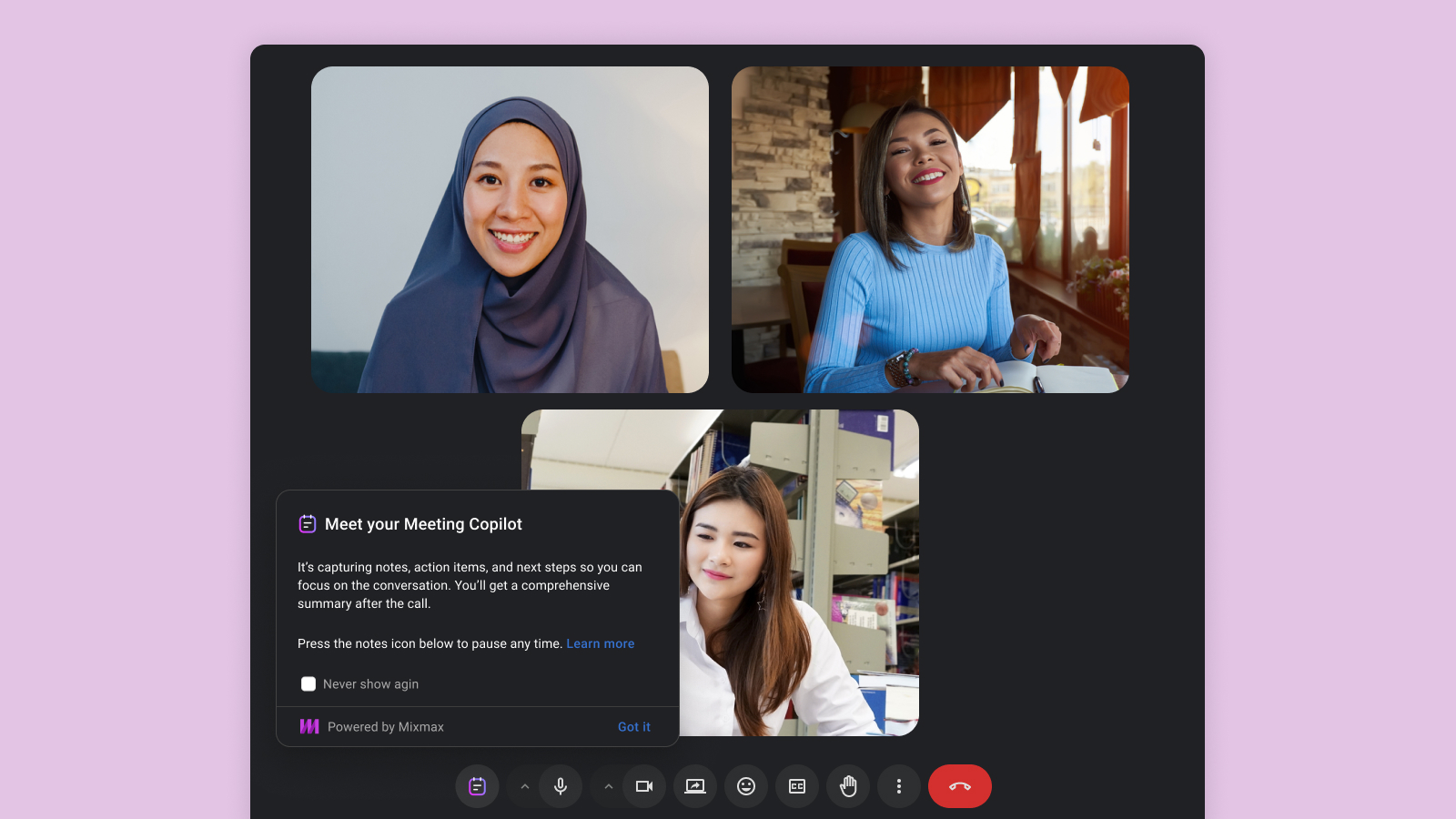
I drove the pivot from invisible recording to a bot-based copilot that joins meetings as a visible participant. Transparency over invisibility — everyone knows the meeting is being captured. This also gave Mixmax clear branding in customer-facing moments, and turned a constraint (needing consent) into a growth lever: prospects see Mixmax adding value in real time, creating organic awareness.
Sharing summaries with external participants
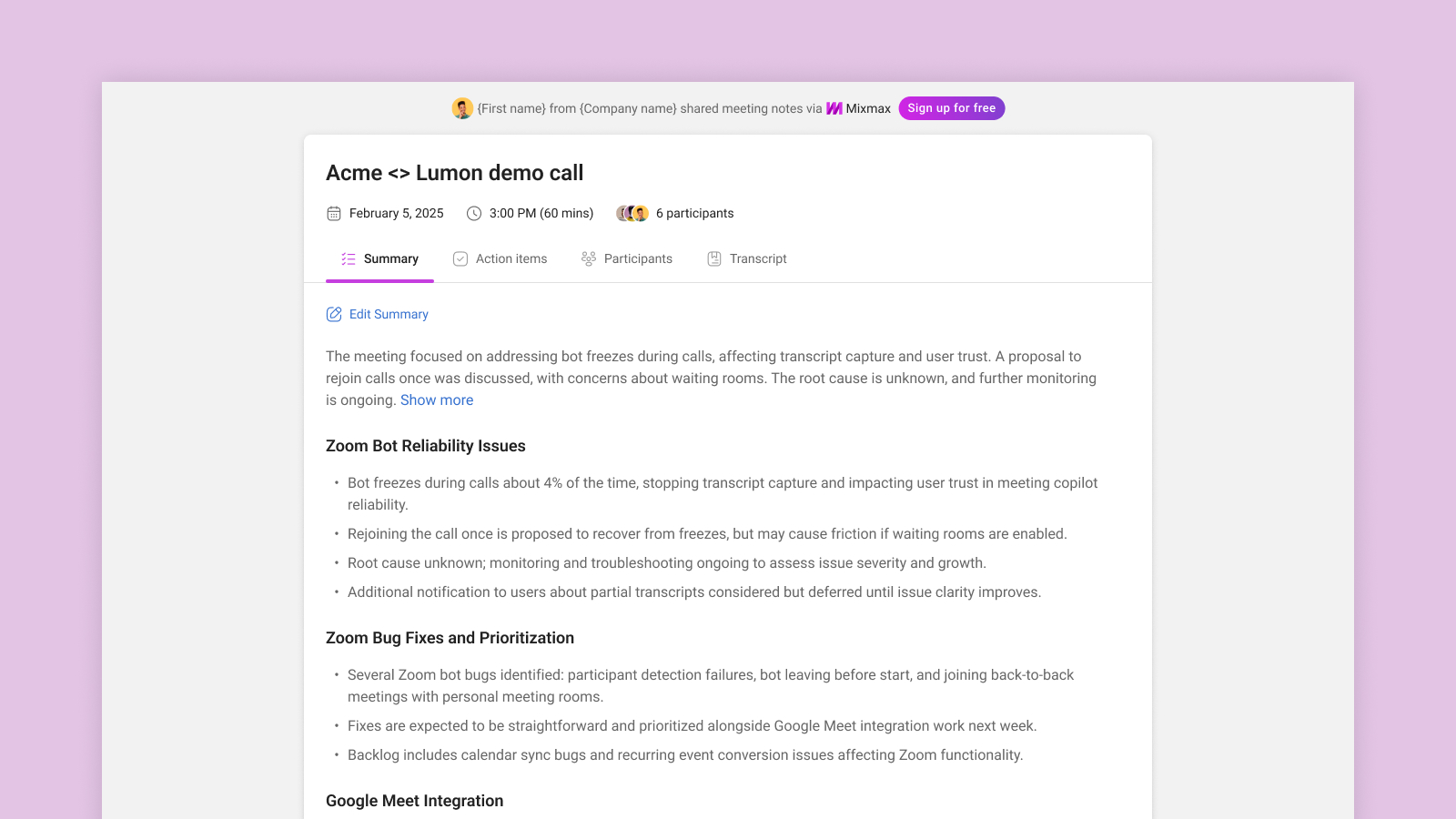
Users wanted to share meeting summaries with prospects and stakeholders who were on the call. I designed a flow for sharing summaries externally, which reinforced transparency and made Mixmax visible to potential new users at the point where it had just demonstrated value.
In-app meeting library
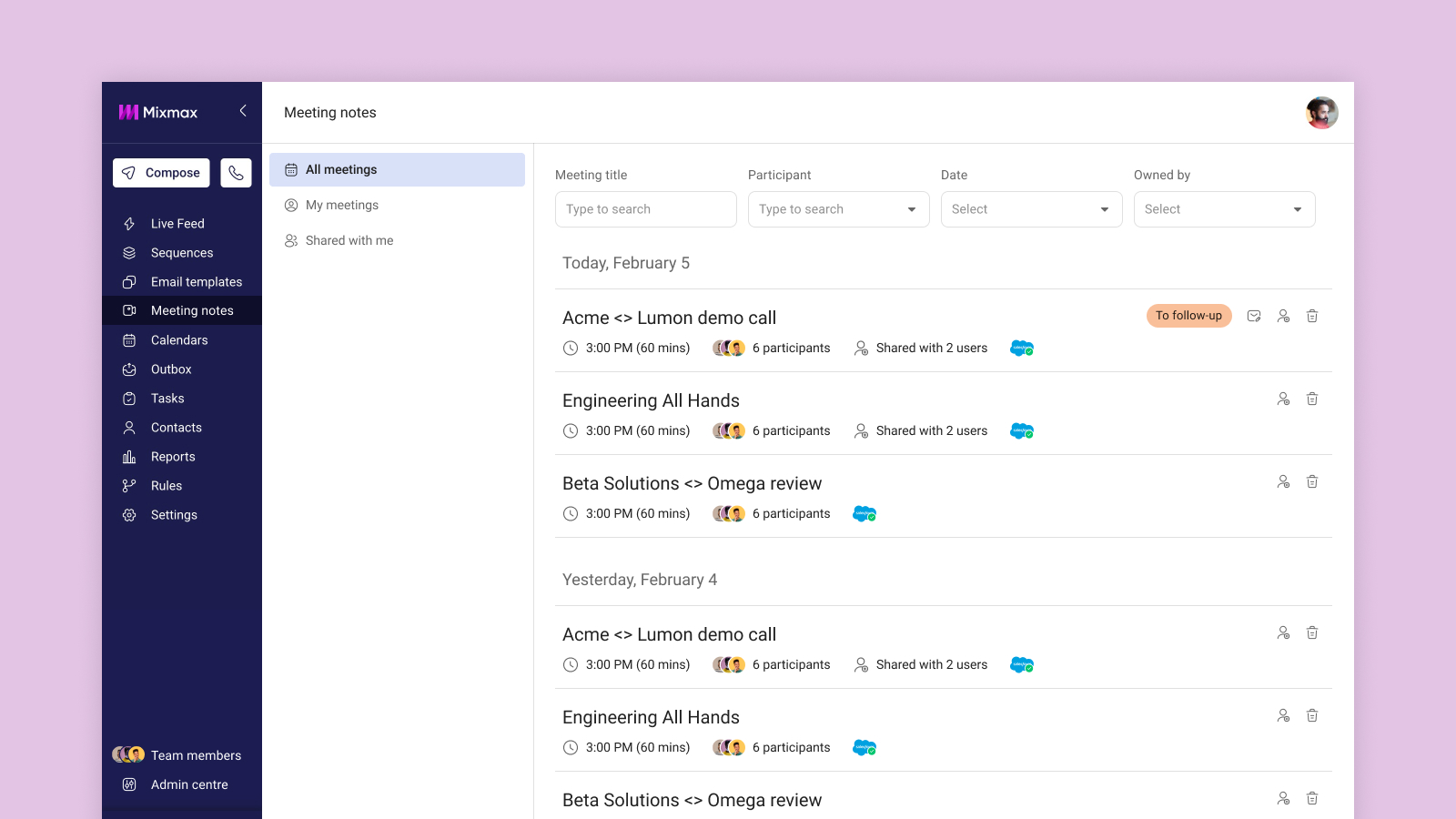
As usage grew, reps needed a way to browse and revisit past conversations. I shaped an in-app meeting library — email remained the primary touchpoint for new summaries, but the library gave reps a searchable archive of all their meetings.
Phase 3: Going Deeper and Earlier
With summaries and the bot established, users started asking for more. They didn’t just want to know what was said — they wanted to understand how the meeting went. Call sentiment, speaking time breakdowns, coaching signals to help them improve as sellers.
Ask Me Anything
To start understanding what users actually wanted from their meeting data, I designed an “Ask me anything” feature — a chat-based UX where reps could ask natural-language questions about any meeting. The interface was familiar (everyone knows how to use chat), and it let us learn which questions came up most often before committing to building dedicated views for each one.
Meeting Prep
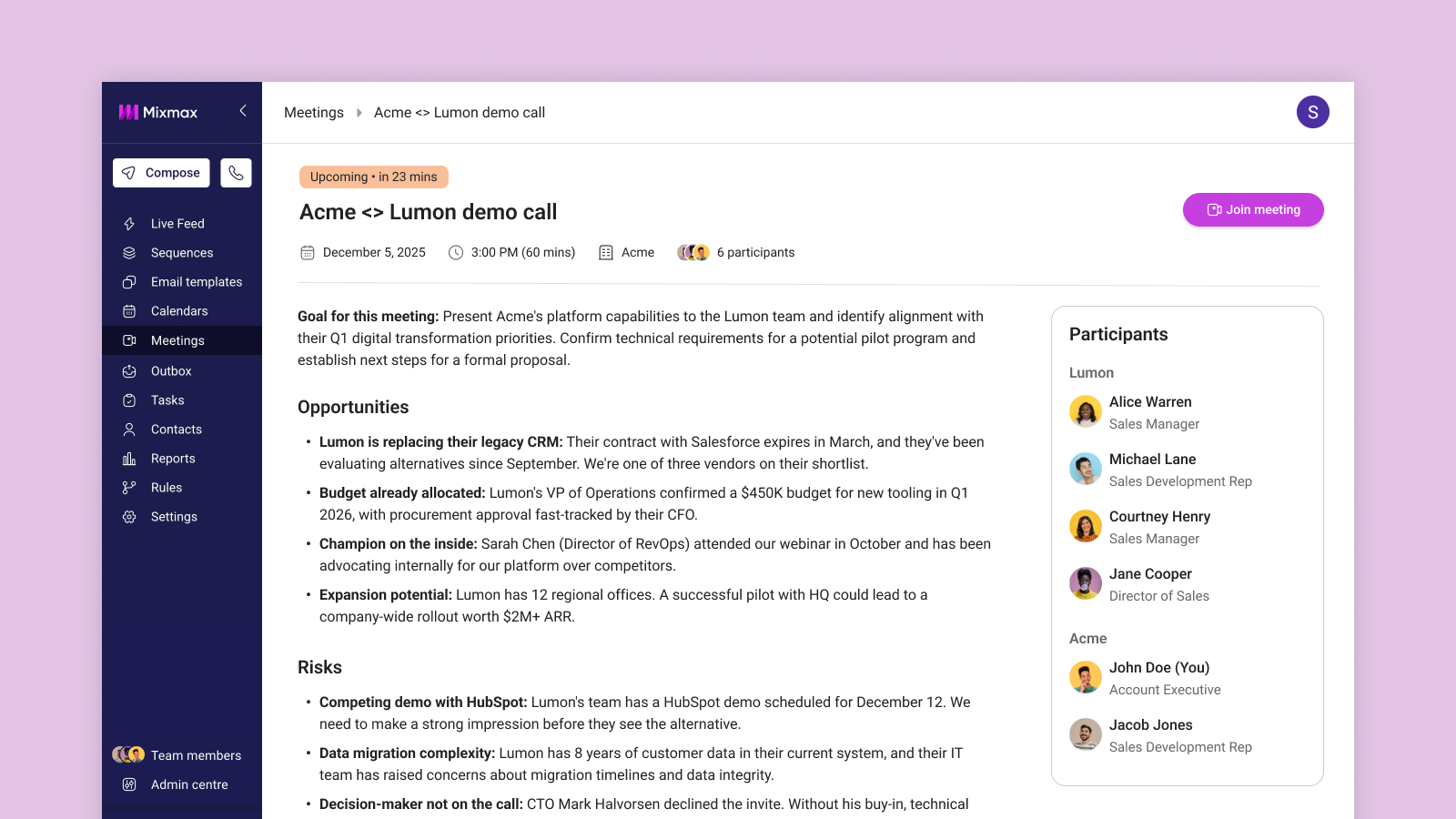
I also moved upstream to before the meeting — a huge pain point because reps typically juggle between CRM, email, LinkedIn, and past notes to prepare for a call. Meeting prep emails are sent ~24 hours before a meeting and include account context, relevant past conversations, and flagged risks and opportunities — all delivered via email for zero friction.
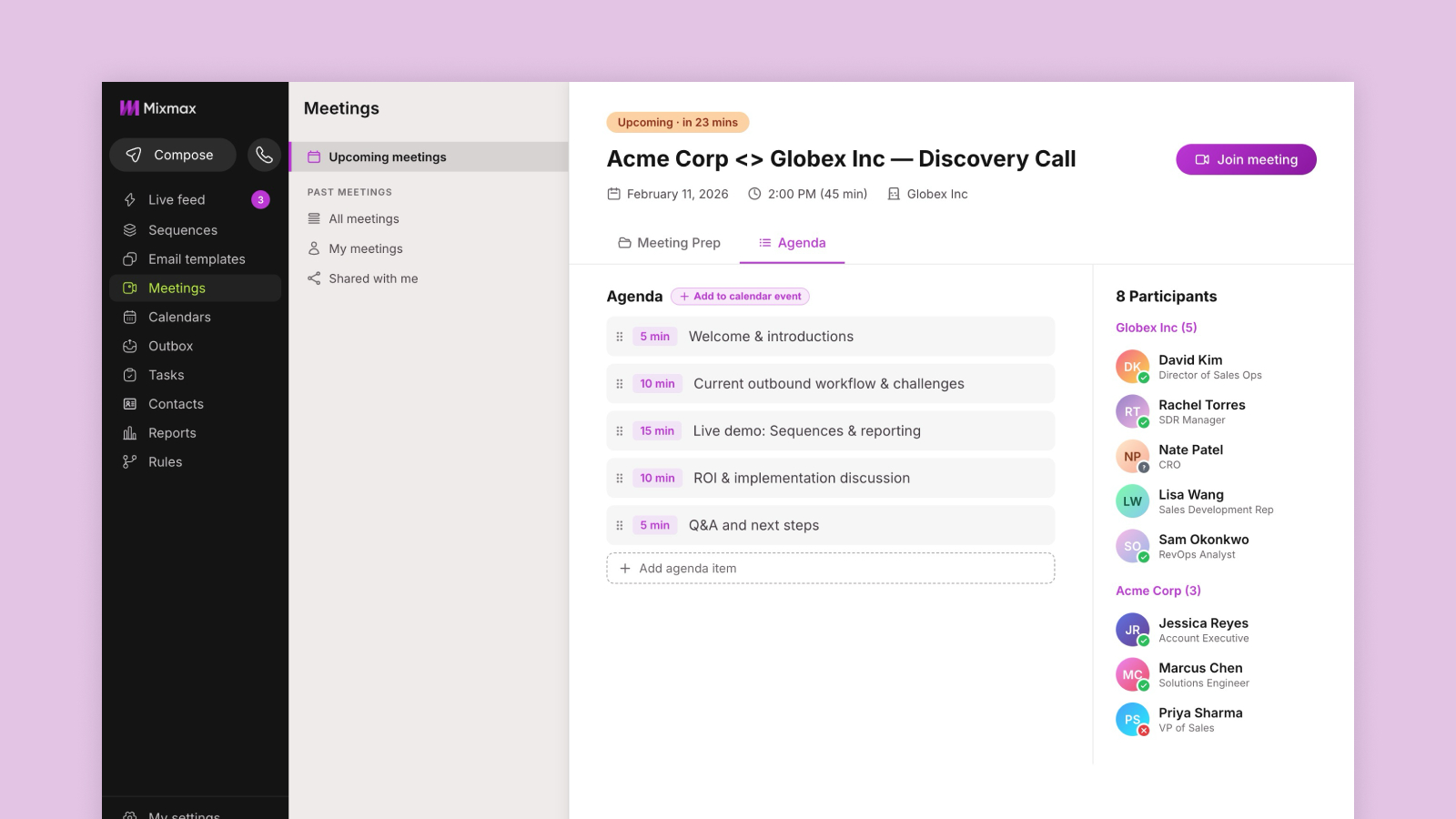
I also designed a flow for reps to create and share meeting agendas with participants ahead of time, giving both sides clarity on what to expect and making meetings more productive from the first minute.
How We Worked
Across all three phases, I ran a continuous research loop: competitive analysis, 1:1 conversations with reps about real workflows, concept walkthroughs, and closed betas with fast iteration cycles. I intentionally avoided over-designing upfront — shipping, learning, and refining was faster and more reliable than trying to get it right on paper.
Impact
- ~30% of paid conversions within six months of launch came through Meeting Copilot
- ~30–35% of new signups tried Mixmax specifically for this feature
- Repositioned Mixmax from an email tool to an AI-first sales platform